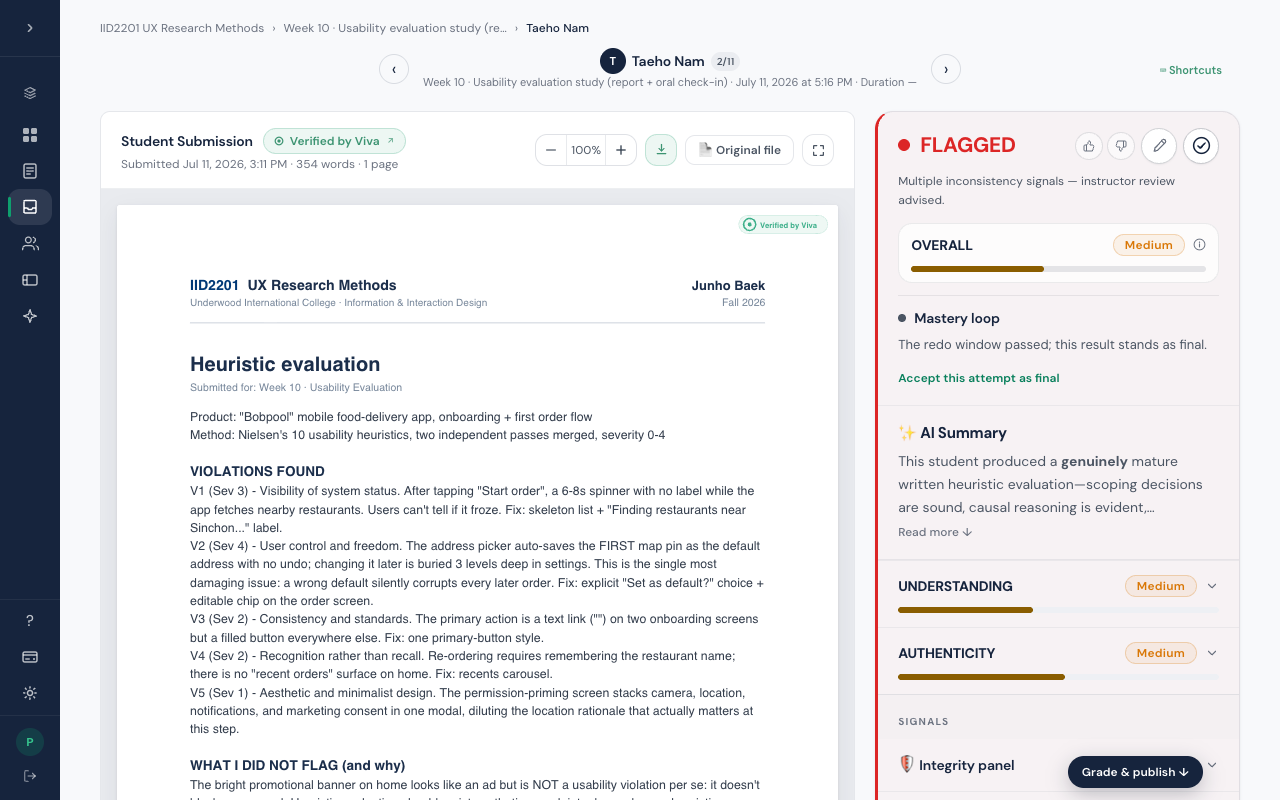
What are the three verdicts?
Strong, Partial and Concern. They describe authorship evidence, not guilt.
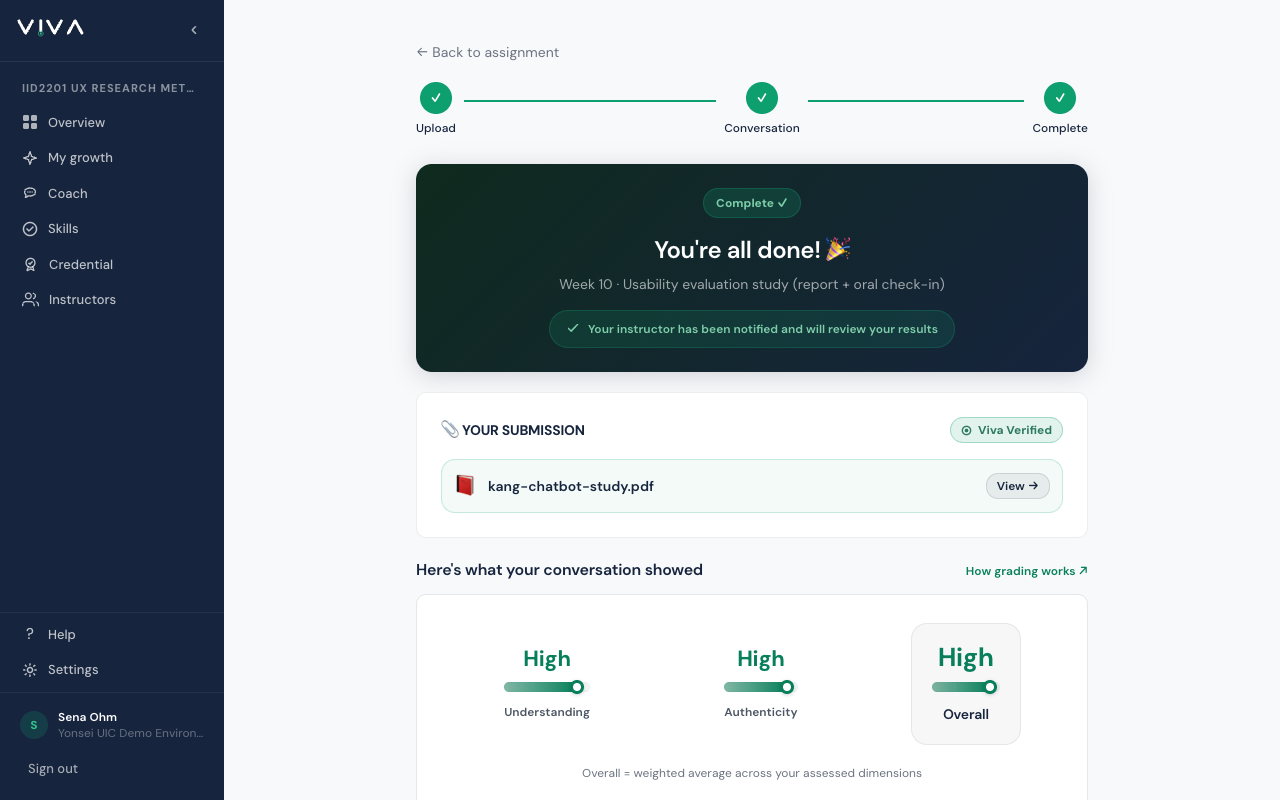
The verdict answers one question: how well does the interview support this student being the author of this work? It is a statement about evidence, not a finding of misconduct.
The line under the verdict says what else the report contains. A verdict can be Strong while the environment, the voice match or an independent re-read still has something worth seeing, so that line names what is most worth your attention, one signal or two, and each one opens the panel that holds it; when there are more, it says how many. It never changes the verdict: the verdict is about understanding and authenticity, and how the interview was taken is reported separately rather than folded into it.
| Verdict | What it means | What to do |
|---|---|---|
| Strong (강함) | The student explained their work the way an author would. Nothing contradicted the submission. | Nothing. Grade as normal. |
| Partial (부분) | The interview did not settle it either way. Usually that means a very short answer set, a technical problem, or a quiet student. | Look at the transcript. Consider a retry rather than a conclusion. |
| Concern (우려) | Something specific did not line up: the student could not account for choices in their own submission. | Read the cited quotes and decide. This is a prompt to look, not a conclusion. |
Two things sit outside the three verdicts. When an oral check-in holds fewer than two real answers and under 35 words in all, the report reads Not enough to grade in grey instead of a verdict and a score, the roster row says the same with the counts, and the conversation stays out of the class average: a number there would describe nothing. And when any interview rests on fewer than three answers or under 60 words, the score stands but an amber Thin conversation line under the verdict, and a Thin note on the roster row, tell you how little it rests on. Both are measured once from the transcript, so the roster and the report always show the same counts.
Instructors get the rest: the walkthroughs, the screenshots, and Ask Viva, which finds the right page from a typed question.